Menokin Artscape 2026: Meet the Artists
Menokin Artscape is our first ever outdoor art exhibit, with this year’s theme being self-emancipation, to commemorate America’s 250th.
As visitors explore Menokin’s grounds, they will see 3 art installations commenting on the 250th, the American experience, and what freedom means to them. We have 3 artists who will be exhibiting their pieces at Menokin in October where they will be on display for a year.
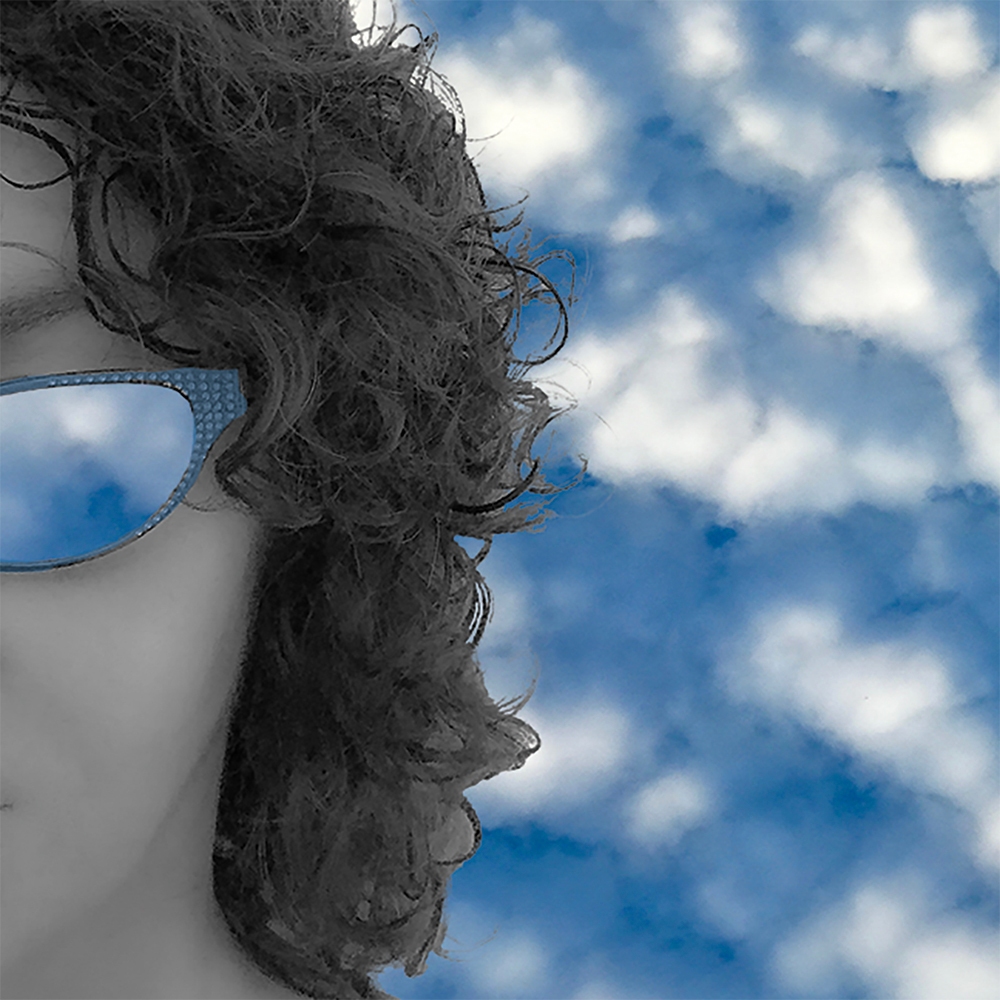
Lynda Andrews-Barry
lyndaandrews-barry.com | IG: @lyndaandrewsbarry FB: Lynda Andrews-Barry
Lynda Andrews-Barry is a multidisciplinary artist whose research-driven practice spans large-scale public art, installation, time-based media, and fabricated sculpture. Her work examines land, infrastructure, environmental systems, and layered histories, translating complex civic and ecological narratives into site-responsive visual systems. Working with found materials and industrial fabrication processes, Andrews-Barry investigates environmental stewardship, cultural memory, and public witnessing. Her projects often function as visual timelines or spatial diagrams, connecting past and present through mapped terrain, continuous line, and engineered form. Her work has been exhibited, commissioned, and collected nationally, including presentations at the National Building Museum, the National Museum of Women in the Arts, and the Smithsonian’s Renwick Gallery. Her public art installations have been realized across Washington, DC, Maryland, Virginia, New Jersey, and Florida. She holds a BA in Interior Design from Mount Vernon College and an MA in Exhibition Design from The Corcoran College of Art + Design. She serves on the Board of Directors of the Washington Sculptors Group and is Editor of "The Washington Sculptor". She is a member of the premier cohort of Environmental Justice Artivist Fellows with Social Art and Culture DC, supported by the Aspen Institute.
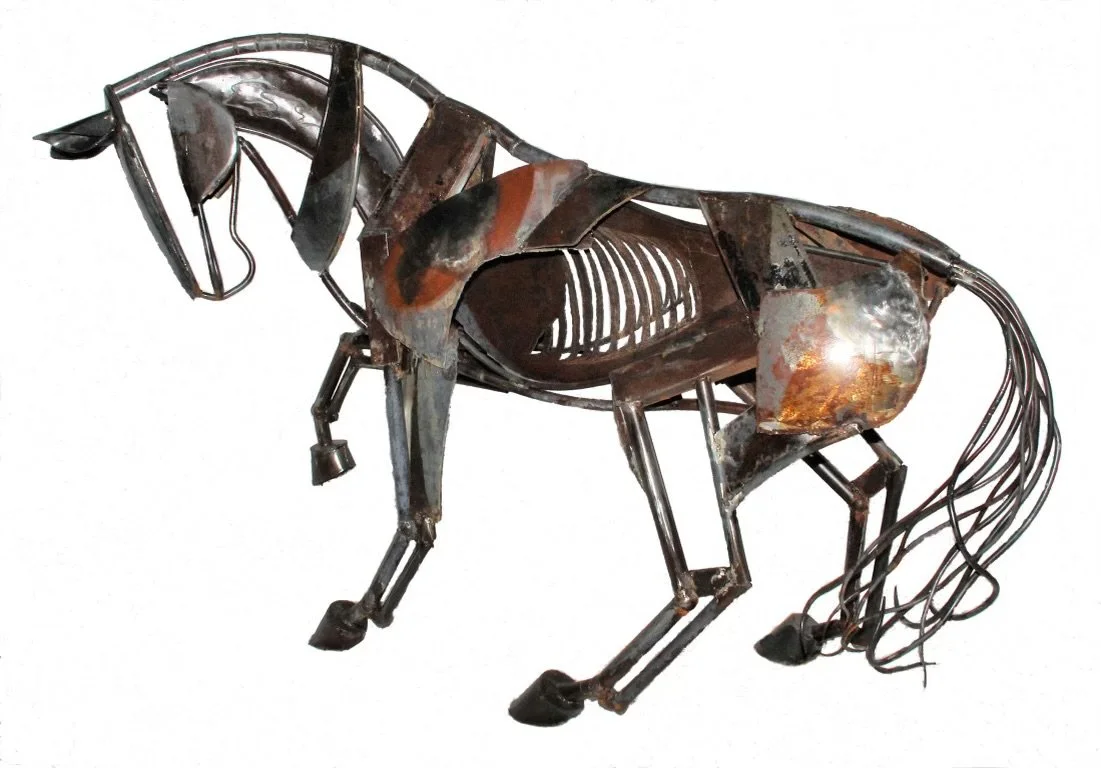
"Banjo" by John Latell
John Latell
www.wicomicoforge.com | IG: @wicomico_forge_gardenworks FB: Wicomico Forge
John Latell grew up near Warrenton, VA and lived and worked in Richmond and Pittsburgh. He’s produced large scale public sculpture both sanctioned for posterity and large works placed carefully in neglected industrial sites. Public art, solo gallery shows, group exhibitions and private, personal work generated much through the lens of metal sculpture though paint, photography, printmaking, wood, concrete and stone also. For over 20 years he’s called the Northern Neck home.
The primacy of form, the nature of mind, loosely held associations, fluid inquiry and eclectic interests are some of which are expressed well in the work of Luiz Zerbini, Anselm Kiefer and Maurizzio Cattelan encapsulated in myriad form of nature and history.
“I would like to abide with my personal work and share it through exhibition. Thank you for your time and may violence and struggle forever be supplanted by sanity, wisdom and grace.”
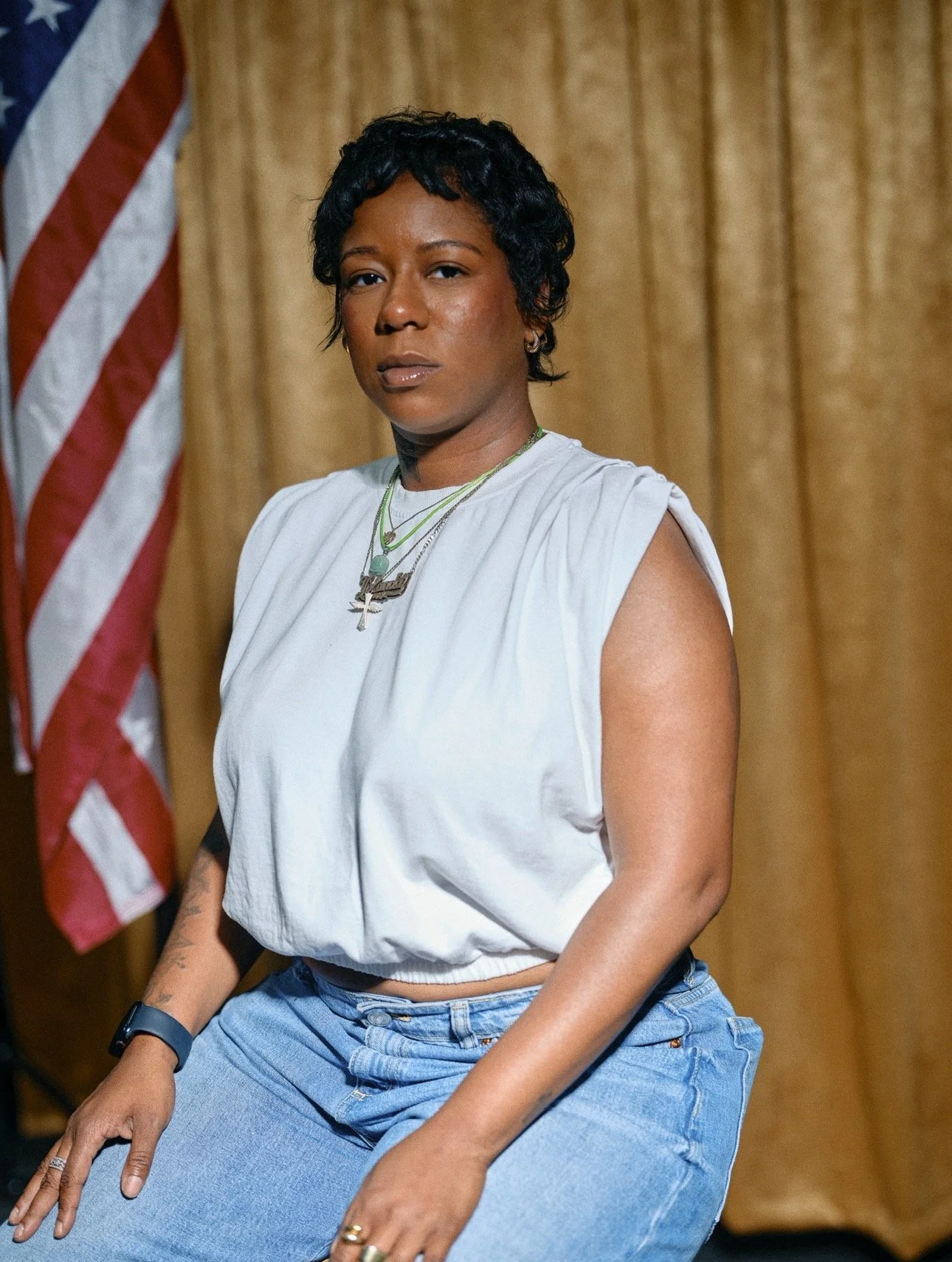
Yolanda Hoskey
www.yolandahoskey.art | IG: @ghetoyolie
Yolanda Hoskey is a Brooklyn-based multidisciplinary artist working across photography and film. Her practice centers on storytelling that examines Black identity, memory, and the layered realities of American life, with a focus on images that hold both intimacy and tension. Through portraiture and moving image, she creates work that challenges singular narratives and invites deeper engagement with the people and communities she photographs.
Yolanda is a 2024 Magnum Foundation Fellow. In 2025, she was named a recipient of the International Photographic Council Rising Star Award, presented at the United Nations, recognizing emerging voices shaping global visual storytelling. Her work has been exhibited in galleries, public art installations, and exhibitions across the United States and internationally, and has been featured in The New York Times, Bloomberg, Times Union, and Essence.
Rooted in her upbringing in East New York, Brooklyn, her work is grounded in a commitment to care, collaboration, and representation—creating images that reflect the complexity, resilience, and beauty of Black life.
We asked the artists questions about their interests & craft. Click below to learn more about them!
-
Lynda: Bettye Saar is my favorite artist because she takes symbols that were used to oppress and turns them into tools of resistance. She proves that materials carry memory, and that art can confront history without apologizing for it.
John: Joan Miró sculpture - prophetic.
Yolanda: Gordon Parks — for his ability to use the camera as both a tool for storytelling and a form of resistance. His work moves between intimacy and social critique, documenting Black life with care while directly confronting injustice. That balance continues to shape how I think about image-making.
-
Lynda: One aspect of my craft that is often overlooked is the depth of research that underpins each project. I spend significant time studying archival records, maps, land use histories, and genealogical materials before translating that research into visual form. The final work may appear minimal or direct, but it is structured by layered investigation and site analysis. I also fabricate much of the work myself, allowing conceptual decisions and material execution to develop in tandem.
John: Structural steel, blacksmithing, coach building, modern fabrication are all fascinating skills.
Yolanda: I'm deeply intentional about how images are constructed. What may read as a straightforward portrait is often carefully staged—considering gesture, posture, and symbol—to hold multiple meanings at once. The tension between what feels natural and what is deliberately composed is central to how the work functions. -
Lynda: As the nation approaches its 250th anniversary, art has the opportunity to move beyond celebration and into reflection. The Declaration of Independence articulated ideals that were not fully extended to all people at the time of its signing, and those contradictions still shape our present. Art can hold both the promise and the unfinished work of those founding principles. It can create space to examine where freedom has expanded, where it has failed, and how it must continue to be actively claimed.
John: I hope we Americans might find a sense of unity in the 250!
Yolanda: Art creates space to question the distance between the ideals America was founded on and the realities people have lived. It allows for reflection, critique, and reimagining—complicating celebration by acknowledging who has been excluded, and what it means to claim belonging now.